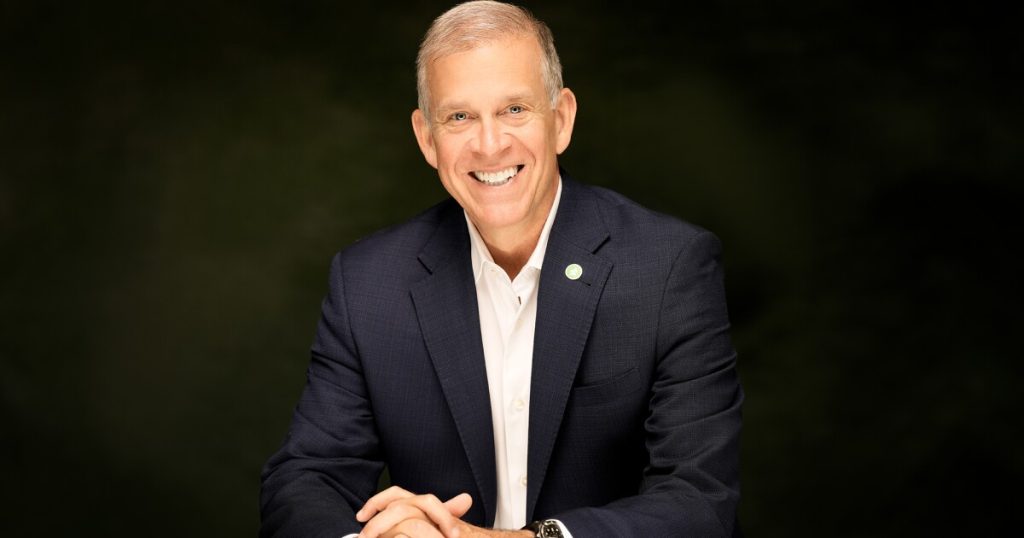
- Key insight: Associated Banc-Corp plans to acquire a family owned, $5.3 billion-asset bank in Omaha.
- Supporting data: The deal would boost Associated’s total assets to about $50 billion.
- Forward look: Associated CEO Andy Harmening said the regional bank continues to focus on its multiyear organic growth strategy.
Associated Banc-Corp in Green Bay, Wisconsin, which has embraced an organic growth strategy in recent years, reached a deal to acquire a family owned bank in Nebraska.
The $44 billion-asset Associated plans to buy Omaha-based American National Corp. and its banking subsidiary, American National Bank, in an all-stock transaction valued at approximately $604 million, the companies announced Monday.
The acquisition would mark Associated’s entry into Nebraska and Iowa, and deepen its existing foothold in Minnesota.
The deal, which requires regulatory approval, is Associated’s first merger or acquisition since Andy Harmening
Shortly after taking the helm, Harmening launched a plan to improve profitability and deliver enhanced shareholder value. The company is currently in “phase two” of its growth strategy, which has included
Buying American National “presents a natural opportunity to expand [Associated’s] footprint across attractive Midwestern markets and enhance [the bank’s] long-term organic growth strategy,” Harmening told analysts during a conference call Monday to discuss the deal.
Analysts on the call wondered if the deal represents a pivot away from the bank’s recent strategy.
“For me, this is not a detour from organic growth. It’s an enhancement of inorganic growth,” Harmening responded.
The Associated-American National tie-up is the latest in
The list includes Columbus, Ohio-based Fifth Third Bancorp’s
Associated’s deal to buy the $5.3 billion-asset American National would add 33 branches, most of which are concentrated in the greater Omaha and Minneapolis/St. Paul metropolitan markets.
American National has $3.8 billion of loans, including a super-prime auto lending portfolio that makes up about 20% of its total loan book, and $4.7 billion of deposits, including $3.4 billion in Omaha.
The deal would vault Associated into the No. 2 spot among deposit-holders in the Omaha metropolitan region. The Wisconsin bank would be No. 10 among deposit-holders in the Twin Cities market.
Pending regulatory approval, the two banks expect the transaction to close during the second quarter of 2026. The boards of directors at each bank have signed off on the plan. American National’s two primary shareholders, who own 99% of the bank, have approved the transaction and entered into transfer, voting and registration rights agreements, the banks said.
After the deal closes, Wende Kotouc, co-chair and co-CEO of American National, will join Associated’s board of directors, Harmening said during the call. John Kotouc, who is also co-chair and co-CEO of American National, will transition into a consultant role.
The transaction caught some analysts off guard.
Casey Haire, an analyst at Autonomous Research, wrote in a research note that “the deal is a little surprising, given this management team has preferred organic initiatives.”
Haire also predicted that the move into Nebraska would “raise questions about future M&A pursuits” to fill in geographically between Wisconsin and Nebraska. Currently, Associated has no branches in Iowa, but it would gain six from American National, all of which are located close to the Iowa-Nebraska line.
Haire mentioned the surprise factor on Monday’s call. But Harmening defended the deal, saying Omaha’s population and economic growth is strong, and the bank’s connection to the community is deep.
He also reiterated that Associated is standing by its focus on organic growth.
“Right now, we feel like we’re doing a deal that’s really good from an acquisition standpoint,” Harmening said in response to an analyst’s question about future capital deployment. “However, we have a lot of ambitions to continue to grow organically, and a lot of ideas in our baseline strategic planning going forward that we think will make very, very good use of capital.”