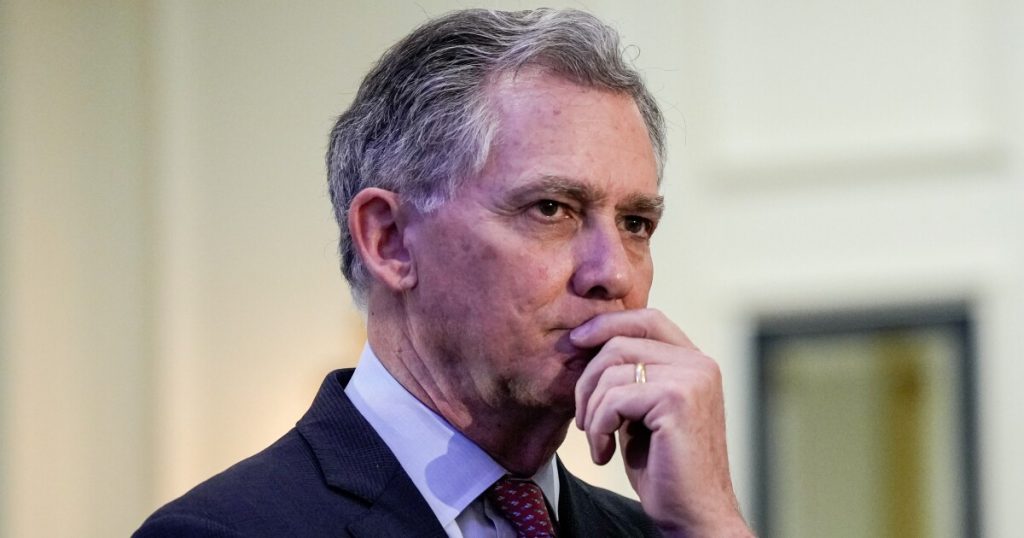
Key insight: French Hill said his bill would reduce regulatory flip-flop when administrations change.
Processing Content
Forward look: Hill said he would introduce the bill this week and ask House leadership for floor time.
What’s at stake: The items in the package are eagerly anticipated by bankers, but it’s a tight legislative calendar for a package to pass both chambers before midterm campaigning picks up.
WASHINGTON — House Financial Services Committee Chairman French Hill, R-Ark., is pushing community-bank deregulation in a legislative package that he unveiled on Wednesday.
The package includes a number of items from bankers’ wish lists, including tailoring provisions, narrowing or removing the “management” component from examinations and prohibiting the use of
Hill said that he and other House Financial Services Committee Republicans, notably Rep. Andy Barr, R-Ky., who is sponsoring the package alongside Hill, will introduce the bill this week and urge House leadership to consider it for floor time.
“And we’re going to talk to our friends on the other side of the aisle, to see if they have additional conversation or suggestions,” Hill said.
Hill said that he hopes the package will codify more clearly the ideas in the 2018 bill, S. 2155
“S.2155 was a good bill where it promised more tailoring, and then we saw it on the left in the Biden administration,” Hill said. “We’re trying to get in law rules that are commonsense, bipartisan that lead to a safer, sounder banking system based on complexity delivery, risk and size and not have this flip-flop.”
The package notably omits some provisions that are favored by some in the banking industry. It doesn’t
The bill does include a debanking section, although it’s limited to banning bank regulatory agencies from using reputation risk as a supervision component, and doesn’t address fair access among the banks themselves.
Hill said in response to a question from American Banker that he doesn’t currently plan on targeting fair access within banks, but left the door open to doing so in the future if probes from regulators turn up compelling cases.
“I don’t anticipate us moving legislation questioning whether a banker has made a prudential safety and soundness decision or made some other kind of decision,” Hill said.
“So we might wait and see if the executive branch produces in their requests for information,” he added later.