Transcript:
Penny Crosman (00:03):
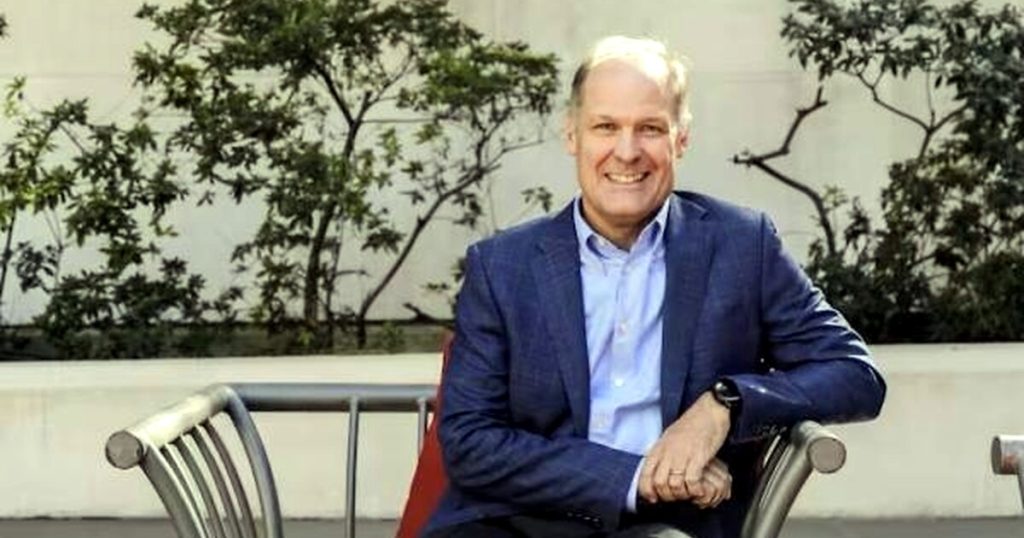
Welcome to the American Banker Podcast. I’m Penny Crosman. Accenture has come out with its top banking trends for 2026 report. And we’re here today with Mike Abbott, Accenture’s global banking lead, who’s going to walk us through his predictions for the coming year. Mike, thanks for coming.
Mike Abbott (00:21):
Thank you, Penny. Always a pleasure.
Penny Crosman (00:23):
Thank you. So your main theme this year is unconstrained banking. What does this mean? Are bankers just going to be allowed to run wild on the streets or what?
Mike Abbott (00:35):
Yeah, I don’t think they’re going to be running wild on the streets, but when you look at our position every year, we get asked all the time, how do we put these reports together? And I think some people think we come up with it, but it’s actually quite simple. Given our position in what we do around the world, we get an incredible amount of inbound questions, opportunities, what banks are looking to do, the investments they’re looking to make, where they’re looking to go. And what we did this year is we looked at everything that we’re seeing, the requests we’re getting all the way down from technology operations all the way up to the boards and the CEOs. And we pulled back and that’s how we informed this year’s trends. And when we looked at the overall theme, the theme I took away was that I think the industry and many people that are reporting on banking right now kind of see how generative AI and a lot of the trends are going to reduce this, cut that, et cetera.
(01:29):
And what we’re seeing is we’re seeing the opposite. We’re seeing people looking at not asking what can I reduce, but what can I create? And where we came with the theme of unconstrained banking is that it’s really about the opportunity. So if you back up, you think about the old Winnie the Pooh analogy. What I think is there’s a lot of EORs out there that are thinking, sky is falling, it’s all over and banking’s going to be in trouble. I see the opposite. I see the tigers. We see the tigers coming into the front door saying, “No, there’s an incredible opportunity.” In fact, if I look at this, I think one CEO summed it up so well for me. Said, “Look, everyone in banking, you win revenue once, everyone gets costs. I want to be a winner.” And that’s about unconstrained thinking. It’s about saying, “How can I use generative AI from an organization of 50,000 people?
(02:24):
I’m not going to be 50,000 people in the future. I’m going to be 500,000. I’m going to do a lot more than I ever could before.” And that’s what this year’s report about. It’s about moving and changing the narrative from being e-ors to being tiggers.
Penny Crosman (02:41):
Well, just to push back on that a bit, banks do have a constant need to be more efficient and to keep costs down. And so if they are spending a lot, large banks are spending billions on generative and agentic AI projects, how do they do that without cutting back on headcount? I mean, are you saying there’s literally going to be new revenue streams generated somehow?
Mike Abbott (03:13):
Yeah. So I think a couple things there. One, this doesn’t mean that jobs aren’t going to shift, right? It doesn’t mean that jobs aren’t going to shift as generative AI comes in. There will be jobs that are shifted and moved, but what we’re also seeing is new jobs will be created. And yes, it’s quite interesting. That’s the cost side of the equation, but we’re also seeing a lot of people focus on the revenue side of it. What can I do with marketing? How can I better target? How can I customize truly at a one-to-one level? How can I build generative AI into my relationship manager engines so that it acts like Google Maps and it helps my RMs avoid going down the red road that’s not going to get me anywhere and instead redirects me that might not be the straightest path to what I want to accomplish, but is much more yellow or green that’s going to get me to where I want to be.
(04:05):
So we are seeing generative AI come in there and generate, I believe, truly new opportunities for revenue for banks.
Penny Crosman (04:14):
And so you mentioned marketing. What are some of those top areas where you think the use of Agentic a generative AI could lead to new streams of income? Are you talking about being able to offer more personalized services and products and thereby gaining more customer share, increasing the share that each customer has at your institution? Or what are some of those opportunities?
Mike Abbott (04:54):
Yeah. And when you look at the marketing side of this, there’s two things to keep in mind. One is exactly what you were saying, which is the opportunity to use generative AI to build truly customized conversations. So I have some banks around the world that now when you call in for an inbound call in the call center, they’re customizing the individual language to that individual to know exactly based on behavioral economics, how they should have that conversational script to ensure that they drive a higher level of conversion. Same thing, even in the collection side of it, it’s being used in the same way. So that’s a great example of the point number one that you’re discussing. But then there’s the second point, which is how do you embed generative AI into banking products that I don’t think people are focusing on all that much just yet, but we’re seeing on the inbound side, which is take payments.
(05:51):
Payments for forever, money’s been sitting out there and it’s kind of as, bankers have all laughed at it, they call it dumb money. I think it’s about to get a lot smarter. So we’re seeing now banks look at how can you take corporate payments and corporate cash and say, how can you attach AI to it and make that money move and be able to make its own decisions when things should be paid, when it should be put into a repo market and so on. Things that really only advanced treasuries on the corporate side had banks now are putting together for small and medium-sized businesses. And those I think are going to be incredible capabilities that banks are having. So we’re seeing it, one, in the traditional marketing, as you said, acquisitions and those things to make it better, but two, you’re seeing now product innovation with AI.
Penny Crosman (06:43):
It’s interesting because I feel like we are seeing a lot of announcements around programmable money, sometimes involving AI and sometimes just involving cryptocurrency, stablecoins, smart contracts. I feel like we’re seeing a lot of siloed attempts. Citibank’s building its own thing. Chase is building its own things. Visa, MasterCard are building their own, PayPal’s building its own. Are these all going to have to come together at some point? Is there going to have to be a protocol or standard that allows all these different kinds of programmable money to talk to each other?
Mike Abbott (07:27):
Yeah. And we just kind of wandered into this, but I’m so glad you brought it up, Penny, because that’s one of the first trends that we’re going to put out that we’ve put out this year is that dumb money’s going to get smarter and it has a whole host of things underneath it. And just to back up one second and start with a little bit of context setting, the way money, or frankly, stocks and bonds have been set up in the banking world has not changed since the days of the Medidichis. I mean, in the days of the Metadichis, you’d move gold from one bank to another. We inherited that entire system for the last 400 years, even in our digital world today. When we move money, we physically move money from, in a digital sense, from one digital account in a bank to another digital account, or we move a digital stock certificate through DTCC from one account to another.
(08:19):
Imagine a world now where the money doesn’t move, the stock doesn’t move, simply you just point the ownership to a different person. So at one level, this transformation of what’s often called tokenization, to your point that I think can be confusing, is simply about rewiring the very fundamentals of banking. Now let’s go down to what you were talking about, which is digital currencies, crypto, and all that. One, when it comes to this idea of stablecoins and each bank having their own stablecoin, from a consumer perspective, yeah, I think they do have to come together. When you look at the likes of, and you’ll see this in your report, the circles and tethers of the world, ultimately payments is not about paying, it’s about being paid. The magic of Visa, when they said it’s everywhere you want to be that ad campaign, which is famous, was not about paying.
(09:14):
It was about saying to people that if you want to pay, this is how it will be accepted. So for the consumer side, yes, if you want to have a stablecoin feature, they’re going to need to have a consistent brand and approach to it. However, and what you’re referring to with all those banks is it’s more the commercial side. Inside of a bank, there’s an incredible inefficiency in keeping no strostro accounts, different money all over the world, stranded cash inside of a bank. If you can build a stablecoin inside of a bank that allows you to move that money around, it allows you to take out that stranded cash, reduce the equity you have to hold back and provide just a much more efficient and effective service to your corporate clients. And that’s what you’re seeing those banks do. So we could do an entire podcast on what’s occurring here, but I’d say one, the key points to take out, one, this is about one, rewiring the entire fundamental thinking of banking from moving to tokenizing.
(10:19):
Two, for consumers, it really is a business of brand and scale, and that’s going to be there. But three, and most importantly, for most corporate banks, it can be done on their own.
Penny Crosman (10:29):
Yeah. And I think we are starting to see that, especially with Citi and Chase, as I mentioned. So let’s go back to the AI themes. I think one thing in the report was a discussion of AI-driven assistance, which are reshaping customer expectations and the prediction that banks, mobile apps could be replaced by ChatGPT. Now, from my perspective, so far, most US banks have been very careful about this. And some of them use AI in the form of natural language processing to understand customer’s intent, but then they are still using APIs to go and get very specific answers to very specific questions. So it’s not a, anything goes, ask me anything and I’ll just generate an answer for you the way ChatGPT is. It’s a much more of a finite list of questions that bots can handle. From what I’ve seen, and I recently saw a test that kind of confirmed this.
(11:40):
Do you think that we’re at a point where banks will soon be able to unleash large language models on their customer data and then give their customers a ChatGPT-like bot?
Mike Abbott (11:54):
Yeah. Well, and there’s two part … Again, there’s two parts of the question. One is you’re absolutely right. The vast majority of banks right now are narrow casting based on what I would call intents, the intent of the customer. For example, I want to solve a lost stolen problem, and they can guarantee that the way the large language model will approach it is going to be constrained and will answer the questions per policy. And there’s no doubt about that, that that is where everything is starting right now, is what I would say is intent by intent. But let me just back up. And if you think of a call center today, most banks hire what you would refer to as universal agents. You hire a call center agent that could answer any question that the customer calls into. But in the end, a customer really just calls in with an intent.
(12:47):
They want to accomplish something. And what is a call? A call is just a series of intents strung together. So now imagine you take what you’re seeing today, which is the intent solution, and now you solve 10 intents, you solve 20 intents, you solve 200, 300. Eventually, you’re going to have the full gamut of the universal agent covered, and then it’s just a matter of orchestrating between those various different intents. So I think that’s the way you’re going to see it evolve. You’re going to see it start right now intent by intent, and that’s what you’re seeing in the banking market. And then you’ll see eventually, once they perfected that, the ability to go broad, but it’s not there yet. It’s not there yet.
Penny Crosman (13:31):
That makes sense. And I think in your report, you also talked about agentic AI, which I know there are different definitions of it. I think of it as an autonomous bots that use generative AI, but are allowed to actually execute tasks on their own. Do you agree with that definition?
Mike Abbott (13:57):
Yeah, I simplify it even further, Penny. I think it’s gotten too … And it’s simply, you write a job spec for the LOM and you tell it, this is what you’re supposed to do. If you think of it like that, like you’re writing a job spec for a job and then you’re giving the agent the ability to do that job within that job spec and those constraints, that’s it. So yes, you could call it autonomous, ability to make its own decisions and take action. That’s exactly what it is. But I think for the average listener, just think of it as you’re giving a job spec and now that agent can do that job. And if you think of it that way, all of a sudden you get to this idea that we’re talking about in the report, which is a 10X banking, which is one person could have 10 agents working for them.
(14:43):
And the marginal cost of bringing those people on or bringing those agents on those new job specs is very minimal. And it goes back to where we started the podcast, which is hence on constraint banking.
Penny Crosman (14:57):
Can you paint a picture? What would be an example of a kind of manager or employee at a bank who could have 10 agents working for them and what would the agents be doing?
Mike Abbott (15:11):
Yeah, let’s go deep for a second if that’s okay. And we’ll go into covenant analysis for commercial banking. So if you think of all the things that have to be done to look at a covenant, to monitor covenants on commercial loans, get the income statements, the balance sheet, email the clients, pull in the information, normalize the information, look at it, look at the policy of the loan and extract all that. Each one of those things can be a job. And then all of a sudden, right now, those are individuals that have to do that, but all of a sudden you could put agents out there, you can have an email agent that goes and gets the income statement, make sure you can have an email agent for emailing the clients and making sure it’s done right and do the right people. You can have an analyst agent that pulls in the income statement and balance sheet and make sure it looks at footnotes and other things and normalizes that information.
(16:06):
You can have a loan reviewer that reviews the loans for the covenants to see if there’s any updates agent that looks at that. So all of a sudden you’ve got somebody running the covenant work that can have 10, 15, 20, maybe even 30 different agents working for them in parallel. I think that’s a really simple, easy analogy for anybody to understand that’s in banking.
Penny Crosman (16:31):
It is. It sounds like somebody’s got to do some business process re-engineering to reverse engineer what this job requires and break it up into these little pieces that can individually be done by agents. I mean, is that going to be easy to do? And is that something AI itself can help do?
Mike Abbott (16:56):
Yeah, great question. So the answer to both those is yes and yes. One, yes, you definitely have to break down the processes. And it’s kind of like it’s the old classic re-engineering that we’ve done our Six Sigma approach to things like, how’s the process work? How should it work? And you have to be very methodical and thoughtful and structured around that approach. But at the same time, there are many AI tools that are emerging out there that will look at existing processes and make recommendations to move there, but you still need people. You still need people in there to make those decisions and pull that together. It doesn’t happen on its own.
Penny Crosman (17:36):
I was thinking that is that the fact that you have more and more commonly used applications like Salesforce and Microsoft Office and ServiceNow that are embedding Agentic AI within their software. Do you think there’s going to be a need for a master agentic AI bot or system to supervise all the other bots? Or can these all live in their own lane? So you have your Salesforce agents live within Salesforce and Microsoft Copilot agent lives within Microsoft and so forth.
Mike Abbott (18:18):
It’s a great question, Penny. So is there going to be a King of Kings. Rule them all, right? Is there going to be a King of Kings? Right now, I don’t think there’ll be a King of Kings. There will be controls that have to be put around all of them. And banks are being very methodical around saying, even if you implement third party agents, they have to be very transparent in what they’re doing, the controls that are put in. And all the partners you just mentioned are phenomenal partners of ours, and we work with every one of them. And I can assure you that every one of them has the controls in each one of their agents to ensure that they can be monitored and looked at. Also, what it does is it doesn’t abdicate management. You still need to put people to look at these things. I think one of the biggest mistakes that the banking industry made with the robotic process automation was set and forget.
(19:11):
You cannot set and forget. These are, you have to treat them like employees and you have to treat it, you have to monitor it, understand it. You have to have owners of these agents and look at them and then monitor their performance and over time because they do drift, they’re not perfect. So the biggest mistake banks can make right now on this Gentic is thinking they can set and forget. They will regret that if they take that approach.
Penny Crosman (19:35):
Makes sense. So I guess every year people in our industry ask, is this going to be the year that a lot of banks modernize their core systems because there’s still a lot of older legacy cores out there. What do you think? Will we see a lot of these kinds of projects? Why or why not?
Mike Abbott (19:58):
Yeah, we’re already seeing a lot of those projects come in at this point in time. Do I think this will be the year of it? I don’t think there’s going to be a year of core modernization. I think it’s going to be a decade, unfortunately, of core modernization. But what’s happened is, there’s a stat out that we’ve looked at which says, if you’re spending, I don’t know, $10 million on a core today or $10 million on some existing core running, in the past it would cost you $30 million, usually three to 4X to modernize it from A to B. Take your pick as to where you’re going to go. Generative AI is taking that number down dramatically. I don’t have any absolute answer yet, but as the ability to reverse engineer, forward engineer and all those pieces come down, I think you will see an acceleration of moving off of the core.
(20:45):
And what I would say is I’d say over the last 25 years, banks have done a phenomenal job, absolutely incredible job modernizing the digital front ends. In fact, they put over three, we think over $3 trillion into that, or close to $3 trillion of investment into the front end globally. And every bank has a great digital app now, but they forgot about the core. And what they’ve done is they’ve made a lot of low cost decisions, which are now having a high cost because by our estimation, 70% of the work is just simply to update and maintain the old software. That is not an effective use of people’s time. So I do think you are going to, if you want to modernize, if you want to capture the future, you’re going to have to tackle that core issue. And we aren’t seeing banks take it on now, especially given that Gentech can make it much more feasible.
Penny Crosman (21:36):
So last question. One of the things that banks worry about with these changes in advanced deployment of AI and in the increasing adoption of cryptocurrencies, digital assets, stablecoins, it’s who’s going to be able to benefit from this and who’s going to get left behind? For instance, with the emergence of stablecoins, a lot of people worry that deposits are going to flow out of banks and into, excuse me, non-bank stablecoins. And we’re already seeing advances in private credit markets getting bigger. Who do you think is likely to win and lose in these scenarios? And I know that’s an incredibly broad question.
Mike Abbott (22:36):
It is a broad question. And we have something in the report. It’s called the Future of Competition. And I think you kind of leaned into it there. I think simply put, the last 25 years, everyone’s talking about neobanks and banks attacking banks, brand new banks, digital only banks attacking banks, and it’s going to be a big problem. Yet after a quarter of a century of digital disruption, think of 2000, your 2000 side of the dotcom bubble. There’s not one digital bank in the top 250 globally, not one, not one has broken through. That said, that’s because they all tried to attack the payments in banking. I think the future of competition is going to go where you’re talking about. It’s going to go after the balance sheet. I think where banks have to look for competition now is not other banks coming at them, but the balance sheet.
(23:25):
And we talk about this in a report, but how far away do you think it is before you can go to a ChatGPT or a Gemini or any of these GPTs and simply say, optimize my idle cash in my banks and then just hook them up and it’ll start moving the money around for you.
(23:46):
By our estimation, if you just move 15% of the people figure that out, or if that feature becomes available and they like it and people can optimize their old cash, that can hit 20% of the banking income by compressing the deposit beta out there on the balance sheet side. And then you mentioned that’s the liability side of it, the deposit side of optimization. And there, you don’t even need a banking charter to do what I just said. You just move the money around it and help them out. And then you mentioned the other side, which is private credit. So I think where we see the competition coming over the next five to 10 years is not from neobanks because they’re constrained mathematically their growth rate by their return on equity. It’s going to be for the balance sheet and coming over the top. I think that’s what banks have to look at.
Penny Crosman (24:32):
Yeah, that sounds feasible. Well, Michael Abbott, thanks so much for joining us today. And to all of you, thank you for listening to the American Banker Podcast. I produced this episode with audio production by Adnan Khan, WenWyst Jeanmary, and Anna Mints. Special thanks this week to Mike Abbott at Accenture. Rate us, review us, and subscribe to our content at www.americanbanker.com/subscribe. For American Banker, I’m Penny Crosman, and thanks for listening.