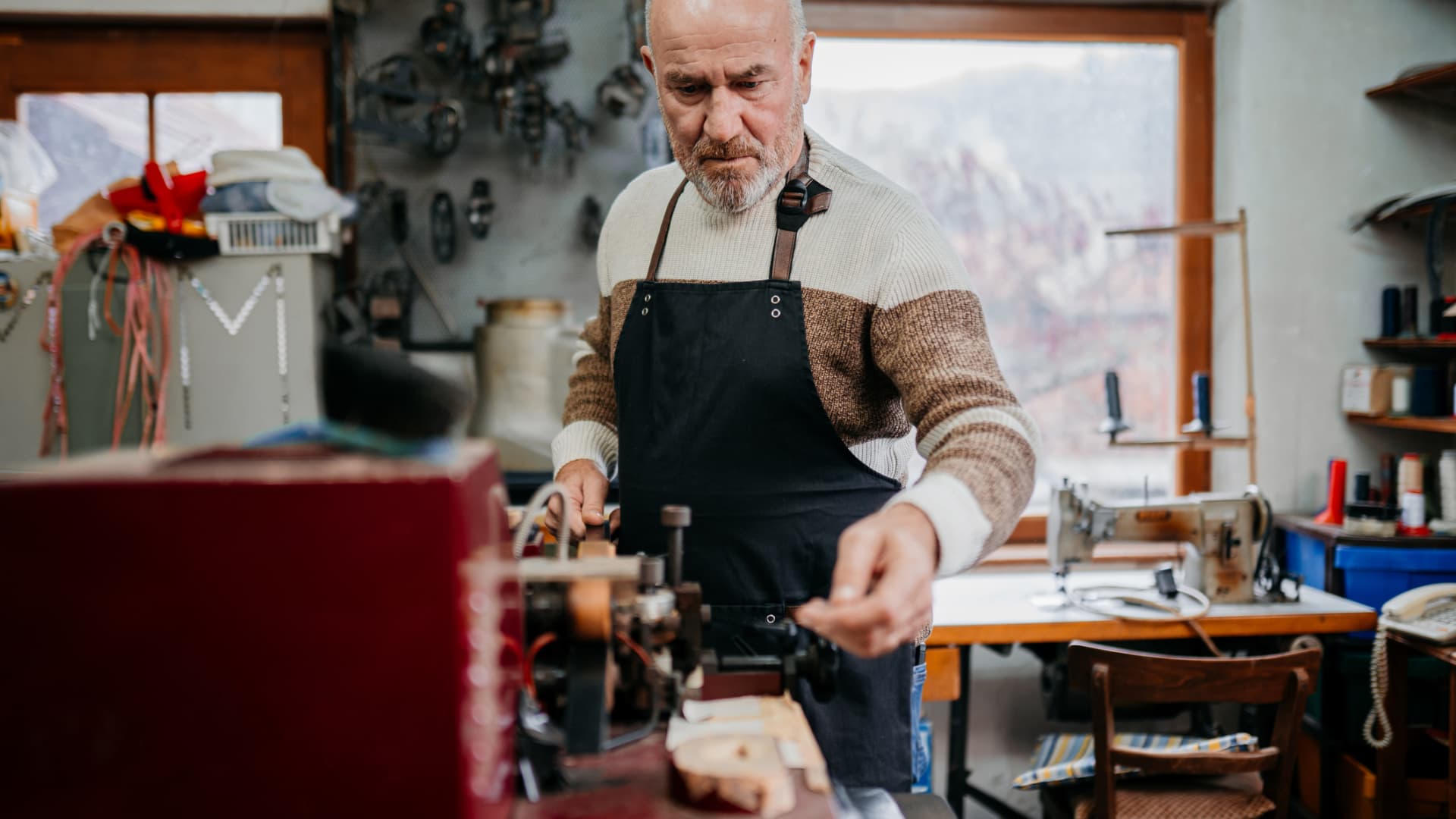
Nikola Stojadinovic | E+ | Getty Images
Some Americans ages 50 and over are exiting retirement and returning to work, according to a new AARP survey.
Most surveyed individuals who are “unretiring” say they’re motivated to make money amid today’s high living costs, the nonprofit organization, which represents people ages 50 and older, found.
In the past six months, 7% of retirees have re-entered the labor force, up from 6% who said the same in summer 2025, according to AARP’s survey results. The latest poll’s results are based on responses from 2,083 adults aged 50 and up who were interviewed in November and December. That followed a summer survey of 2,362 adults ages 50 and over conducted in July and August.
“This idea of retirement as a cliff, where we’re all working towards this one day where we finally get to retire, is really not the reality for so many people in this country,” said Carly Roszkowski, vice president of financial resilience programming at AARP.
The two most common reasons people retire are financial readiness or a health issue or disability, according to AARP.
Of the people who are unretiring now, 48% said their primary reason is financial necessity or their economic outlook is poor, while 15% cited boredom and 14% said they want to stay active, AARP found.
Among those surveyed who are working or looking for work, 41% said their biggest motivation is daily living costs.
Unretiring can be a challenge
Yet AARP’s findings also showed that those workers do not necessarily find a welcoming labor market.
More than two-thirds of older workers — 67% — said it would be difficult to find a new job now, according to the results. Age discrimination was the top reason cited, followed by health issues or disability.
Meanwhile, almost one-quarter — 24% — of older workers worry they could lose their jobs within the next year, the survey found. New data shows January layoffs were the highest to start the year since the global financial crisis in 2009, according to outplacement firm Challenger, Gray & Christmas.
“Just because people aren’t unretiring doesn’t mean they don’t need to,” said Geoffrey Sanzenbacher, professor of the practice of economics at Boston College and a research fellow at the Center for Retirement Research at Boston College. He has researched the trend of unretirements.
Instead, those who remain in retirement could be limited in their ability to work by health conditions or lack of opportunities.
‘People really are sensitive to inflation’
Older individuals now face a challenging combination of higher-than-normal inflation, stock volatility and a soft job market, Sanzenbacher said.
Retirees typically rely either exclusively on Social Security — provided they have reached eligibility age for retirement benefits — or a combination of those benefits and retirement investments, he said.
But if the stock market isn’t providing necessary returns, and Social Security’s annual cost-of-living adjustment doesn’t provide enough of a financial boost, that may drive people back to the labor market, Sanzenbacher said.
“People really are sensitive to inflation,” Sanzenbacher said. “Even if their incomes go up, I still think they feel pinched if the things they buy are a lot more expensive.”
The AARP is working to provide resources to help older workers get hired. That includes a collaboration with job board Indeed to aggregate listings at organizations that value older workers and employees of all ages, according to Roszkowski.
Have you recently returned to work from retirement and are willing to share your story? Email [email protected].