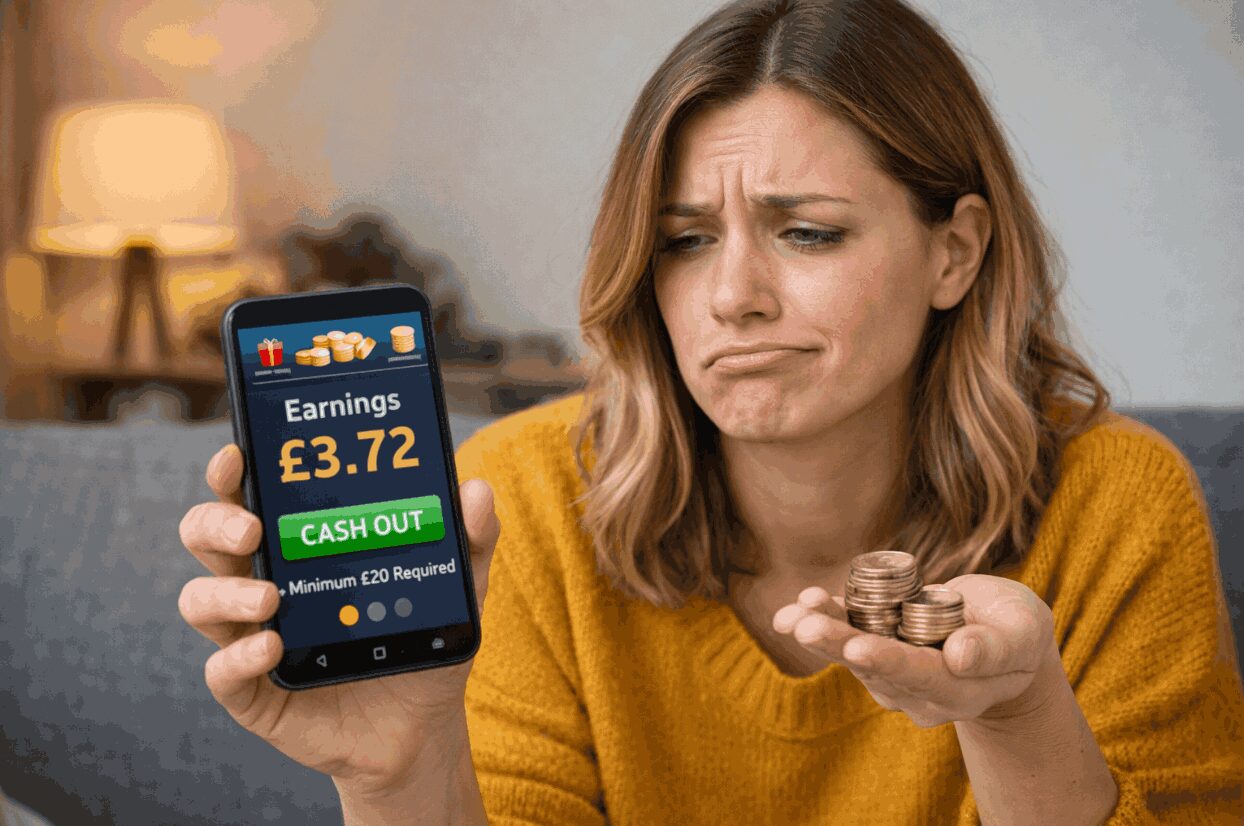
At least, that is what the adverts want you to believe.
As consumer champions, we wanted to know whether these apps really do pay out — or whether they are simply another overhyped online promise. So we tried them for ourselves, tracked what happened, and then compared our results with what real users were saying on forums and discussion boards.
The honest answer? Some do pay. But the reality is far less exciting than the marketing suggests.
Quick takeaway
- Some game apps do genuinely pay users
- The amounts are usually very small
- Most rewards come from completing tasks, not just playing casually
- Many apps make it hard to reach the payout threshold
- Scam versions do exist, so it is important to stay cautious
What happened when we tried these apps
We tested several of the most talked-about “play and earn” style apps in the way most people would actually use them — in spare moments, on and off throughout the day, without sinking hours into them like a full-time job.
Across the apps we tried, the same pattern kept cropping up. The ads implied that simply opening a game and playing for a while would lead to easy earnings. In practice, the apps pushed us towards very specific tasks: download this game, reach this level, keep playing until you hit a milestone, watch ads, or complete extra offers.
What we found in simple terms
- Typical use: 30 to 60 minutes a day
- Typical earnings after several days: low single figures
- Usual cashout hurdle: a minimum threshold before any withdrawal
- Common requirement: complete milestones, not just casual play
- Big frustration: progress tracking was not always reliable
Even where earnings did build up, they tended to build up slowly. In most cases, we were still below the minimum cashout amount after several days of normal use. That is a long way from the “easy money” message pushed in social media ads.
So yes, there was some movement on the balance. But no, it did not feel like a meaningful money-maker.
These apps are not always outright fake, but they are often heavily oversold. You are usually not being paid simply to play. You are being paid to complete a set of marketing-driven tasks, and the rewards tend to be small.
Our experience was backed up by what other users say online
To check whether our results were typical, we looked at what people were saying in public online discussions, especially on Reddit forums where users tend to be more blunt about whether something is worth the effort.
The overall picture was strikingly similar to our own experience. Plenty of users said they had received real payouts at some point. But they also said the earnings were low, the effort was high, and the most heavily advertised claims did not match reality.
Real online experiences that matched what we found
Found in public Reddit discussions in communities including beermoney-style threads and UK money-saving discussions.
Found in public Reddit threads discussing whether “play games for money” apps are legitimate.
Found in larger public Reddit discussions around money-making apps and payout experiences.
That matters because it shows our experience was not a one-off. The same issues kept coming up again and again: low earnings, thresholds that are annoying to reach, and a gap between the marketing hype and the lived reality.
What users online and our testing both suggest
- Some apps do pay out eventually
- Most people do not earn very much
- The best-advertised earnings are not typical
- Tasks and conditions matter more than gameplay
- The time-versus-reward balance is often poor
Why these apps can pay at all
It helps to understand what these apps really are. They are not usually paying you because your gaming skill is somehow valuable. They are typically being paid by advertisers, app developers or marketing networks who want installs, usage, attention and data.
That means when you get paid, you are often getting a small slice of the money the platform makes from your activity. You might be downloading a sponsored game, watching adverts, or generating engagement that helps another company.
That is why the payout is usually low: you are only ever receiving a fraction of the value being created.
These apps are often built around advertising and user acquisition. You are not being paid a wage. You are receiving a small reward for your time, attention and activity.
The biggest catches people need to know about
1. You are rarely paid just for “playing”
This was one of the biggest disconnects we found. The marketing suggests a laid-back reward for casual gaming. In reality, the apps often want users to hit exact levels, complete time-limited goals or unlock stages that can take far longer than expected.
2. Minimum payout thresholds can keep you stuck
Many apps only let you cash out after you hit a set amount. That sounds reasonable until you realise how slowly the balance can rise. It is one of the easiest ways for apps to appear generous while still frustrating casual users who never quite get over the line.
3. Tracking problems are a common complaint
One thing we noticed ourselves — and saw repeated online — is that progress does not always seem to record smoothly. If a milestone does not track properly, your time may not translate into rewards.
4. Time versus reward is often poor
For many people, the core problem is not whether the apps are “real” or “fake”. It is whether they are worth the time. On that front, the answer is often no. The money tends to be too small to justify the effort unless you are doing it casually and keeping expectations very low.
5. The ads are usually the most misleading part
Even where apps do pay, the way they are promoted often paints a fantasy version of what users can expect. That is why people feel duped: not always because they never get any money, but because the payout is nowhere near what the ad implied.
“Pays out” and “worth doing” are not the same thing. An app can technically be legitimate and still leave most users feeling disappointed.
How to spot the scam versions
Not every app in this space is simply overhyped. Some are much worse than that. Scam versions exist, and they rely on the fact that people are already primed to believe easy-money promises.
Red flags to watch for
- Big promises like “guaranteed £100 a day” or “instant cash in minutes”
- No clear explanation of how rewards are earned
- No obvious terms about withdrawals, thresholds or conditions
- Pressure to upgrade, pay upfront or unlock “VIP” earning tiers
- Dodgy-looking reviews that all sound the same
- Apps that push you to hand over lots of personal data before you understand how they work
A legitimate app might still be disappointing. A scammy one will often be vague, aggressive or designed to collect personal details without ever delivering anything meaningful in return.
Why giving your bank details can be risky
One of the biggest warning signs is when an app starts asking for sensitive financial information earlier than you would expect. That does not automatically mean it is fraudulent, but it should make you pause.
Be careful with financial details
Giving any app your bank details comes with risk, especially if you do not know who is behind it or how your information is stored.
- Your personal data could be stored badly or shared more widely than you realise
- You may expose yourself to fraud attempts later on
- Scammers can use one “harmless” app sign-up as a route into more convincing follow-up scams
- If the app is not trustworthy, you may struggle to remove your information afterwards
Safer approach: where possible, use protected payment methods such as PayPal or stick to gift-card payouts rather than handing over full banking details.
As a rule, if an app is promising easy money and wants sensitive information too early, that should make you wary. The easier the promise, the more careful you should be.
So are any of these apps honest?
Some are honest in the narrow sense that they do really pay users something. That is important to say, because not every app in this category is fake. Some people do eventually cash out, and we found enough real-world comments online to show that genuine payouts do happen.
But “honest” depends on what you mean. If you mean, can a person really receive money? then yes, sometimes. If you mean, do the ads honestly reflect what most people will earn? then far less often.
The apps that seem most legitimate are usually the ones that are the least dramatic about what they offer. They explain the tasks, they make the payout method clear, and they do not pretend that casual users are about to stumble into a brilliant income stream.
Signs an app may be more legitimate
- Clear payout options and conditions
- Realistic language about earnings
- A proper website or company behind the app
- Independent user discussions that describe real experiences, not just glowing app store reviews
- No upfront fee to start earning
The fairest verdict
After trying these apps ourselves and comparing our results with what users were saying publicly online, the fairest conclusion is this:
Some game apps really do pay out.
Most do not pay very much.
And the difference between the advertising and the reality is where most of the disappointment comes from.
That does not make every one of these apps a scam. But it does mean readers should go in with very realistic expectations. These are not likely to be proper side hustles for most people. At best, they are a small reward for time you were already going to spend on your phone anyway.
If you like mobile games and do not mind picking up a little extra here and there, some apps may be worth trying cautiously. But if you are hoping for meaningful income, quick wins or effortless payouts, you are very likely to be let down.
The bottom line: yes, some phone games that claim to pay really do pay. But usually only a little, and only if you are willing to work through the catches.