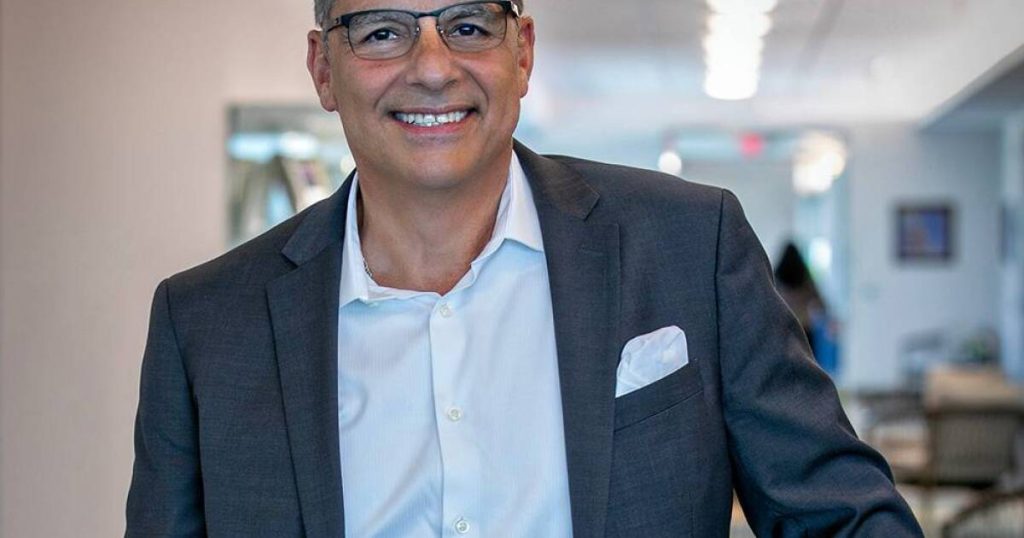
- Key insight: Popular’s mainland operation is getting a new leader, as freshly appointed CEO Javier Ferrer puts his stamp on the company.
- Expert quote: “Traditionally, the U.S. has been a growth engine for Popular. It provides significant geographic diversity for us from our Puerto Rico operations.” — Chief Financial Officer Jorge Garcia
- Supporting data: Roughly $15 billion of Popular’s $75.3 billion of total assets are in its mainland banking subsidiary.
Puerto Rico-based Popular, Inc. has named a new leader for its mainland U.S. operations, as freshly appointed CEO Javier Ferrer begins to put his mark on the company’s leadership team.
Processing Content
On July 1, Israel Velasco will become head of U.S. operations at Popular’s mainland banking subsidiary, Popular Bank, which has branches in New York, New Jersey and South Florida. Velasco has led the firm’s operations in the Sunshine State for the last 21 years.
The U.S. leadership change was triggered by the upcoming retirement of Eduardo Negrón, Popular’s chief administration officer. Manuel Chinea, who led the company’s mainland operations for 13 years, is moving to Puerto Rico to take over many of Negrón’s responsibilities, opening the door for Velasco’s promotion.
The two appointments mark some of the biggest leadership changes during the short CEO tenure of Ferrer, who took over Popular’s top job last summer. Both newly appointed executives will play key roles in a Ferrer-led push to improve the company’s financial performance.
Popular is Puerto Rico’s largest bank, with total assets of $75.3 billion, about $15 billion of which are in its mainland banking subsidiary.
“Traditionally, the U.S. has been a growth engine for Popular. It provides significant geographic diversity for us from our Puerto Rico operations,” Chief Financial Officer Jorge Garcia told American Banker.
After Popular
Ferrer, Popular’s onetime chief legal officer, has started to put his stamp on the company
In October, Ferrer laid out what he described as a new strategic framework for the company, built on three goals.
One of those objectives involves generating a sustainable 14% return on tangible common equity over the long term. In 2025, Popular reported a full-year return on average tangible common equity of 13.04%, up substantially from 9.85% the previous year.
To meet its long-term target, Popular has established more qualitative goals related to both revenues and expenses.
On the revenue side, the bank is looking to deepen engagement with its existing clients, including by advancing its digital solutions. Chinea, the U.S. executive who’s relocating to Puerto Rico, will play a key role in those efforts. His responsibilities will include oversight of customer experience and marketing.
“They want to get more from their strong customer base in Puerto Rico. There’s times when some smaller competitors are trying to win share,” said Manuel Navas, a Piper Sandler analyst who covers Popular.
On the expense side, Popular is aiming to streamline operations and reduce costs. To that end, the company announced last fall that it had decided to close four underperforming branches in the New York metro area. It also announced plans to exit the U.S. residential mortgage origination business.
Navas said that Popular’s mainland operations rely more on wholesale funding than its Puerto Rico business, which is known as Banco Popular, does.
“Because of that, they wanted to exit a couple of businesses to simplify the bank,” he said. “I think it’s all part and parcel of moving to a simplified structure that also simplifies the expenses.”