Inside the FOMC
The New York Financial Writers Association used to have an annual gala (they still host this dinner every year) I went to a few times. The ostensible goal was to raise money for journalism scholarships, but nobody really cared about that; the real goal was just to get dressed up and get a free dinner and drinks (many drinks, too many drinks) at a fancy hotel in midtown Manhattan. The entertainment would be a mix of live skits and recorded videos that all spoofed whatever was in the news.
Processing Content
One year I got involved and did a skit spoofing the Fed, “Inside the FOMC.” I wrote it, directed it, and produced it; I even made a cameo as Ben Bernanke. “Set a course for interest rates, and rage, when these 12 sassy, brassy central bankers get together.” The conceit was a meeting of the FOMC done Bravo TV-style. So by the end everybody is fighting and mad at each other. Clever, right? I was pretty proud of it at the time, and still have it on my desktop at home. In fact, I watched it while writing this. It’s, ah, it’s pretty bad.
I was thinking of that video while thinking about the next meeting of the FOMC, because boy howdy could Andy Cohen do a lot with that cast. As our John Heltman
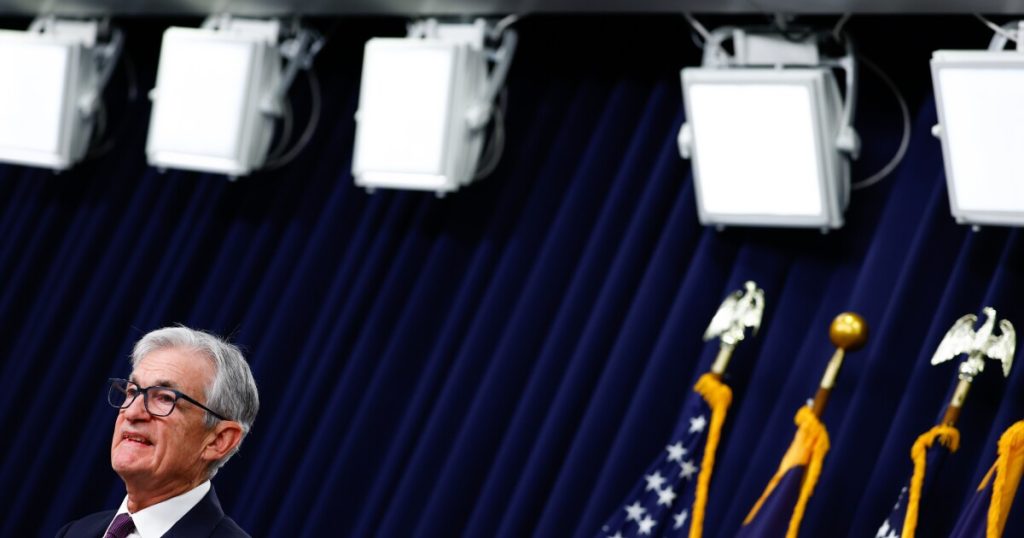
Powell denied the decision was political. He said it was all about maintaining the Fed’s independence, and from a certain angle that’s true. But of course it was political. Powell is staying because the president has been assailing the Fed, and Powell specifically, for years, and
What Powell fears, justifiably, is the Fed becoming not the independent central bank focused on stable economic growth but one controlled by the president and doing their bidding. Because if Trump pulls this off, it’s hard to imagine the next president just giving up that power. What Powell is doing is completely political. Defensible. But political.
Can you imagine how awkward the next Fed meeting is going to be? Warsh, Miran, and Powell, with Trump’s visage hanging over all of it. Oh, and little things like the economy hanging in the balance. It probably won’t have the fireworks of a good Teresa-Melissa fight, or a Bethanny-Carole fight, or a Lisa VanderPump-everybody fight, but it’ll be dramatic, I’m quite sure.
A really unusual conference call
Conference calls with executives after earnings reports are usually pretty standard affairs. The top executives put their spin on the numbers and analysts ask their questions. There is a sameness to them, a routine.
And that is how the call for Customers Bank sounded last Friday. CEO Sam Sidhu opened with some remarks about how he was now CEO of the parent company, a transition that had been in the works for some time. But that, he said, didn’t mean the bank was changing. “The strategy, the culture, and the principles that got us here are not changing,” he said. He talked about the quarterly numbers, he talked about the bank’s initiatives, and he talked about AI. He talked kind of a lot about AI. “I am personally leading our AI transformation effort,” he said. All in, Sidhu spoke for about 12 minutes.
If you were on the call, listening live, I imagine you didn’t notice anything unusual. The call quality was very clear, his voice came through cleanly. Sidhu sounded a little stiff, a little monotone, but it was probably something you would not have noticed live. He just sounded like every other slightly bored CEO delivered canned remarks. There was some change in tone, some emphasis on certain words, but a lot of it sounded pretty flat. If you listen to it now – knowing what I’m about to tell you – the flat tone is more noticeable.
At about the 25-minute mark,
I have to say, AI Sidhu sounded really good. The bot sounded pretty much just like Sidhu, and that is not a back-handed crack. But, why? What’s the real win here? Do CEOs hate conference calls so much they want to outsource their participation? What was Sidhu doing while AI Sidhu was explaining the company’s performance to analysts? Pouring over spreadsheets? Analyzing the P&L statements? Napping? Who knows. But even more than that, how does having AI Sidhu – or AI Dimon or AI Moynihan or any other CEO who wanted to do this – deliver the CEO’s prepared remarks help achieve the goal of the conference call? You could just email analysts the prepared remarks. Why even have the call at all if the analysts aren’t actually talking to the executives and getting their actual, real, human, insights? AI may be good at a lot of things, but not every thing that AI is good at is itself a good thing.