- Key insight: The guilty plea means that at least three former employees of the bank have admitted to crimes that helped move dirty money.
- What’s at stake: The Justice Department has continued to investigate former TD employees who were involved in the bank’s historic anti-money-laundering failures.
- Forward look: TD said that it still has “important milestones” to hit in its compliance revamp in 2026 and 2027.
UPDATE: This story includes a comment from a TD Bank spokesperson.
Processing Content
TD Bank has
A former employee of a New Jersey branch pleaded guilty Thursday to charges that he helped move dirty money through TD accounts. Oscar Nunez-Flores admitted in federal court that, between 2021 and 2023, he accepted bribes to assist in the laundering of nearly $27 million between the U.S. and Colombia.
Nunez’s plea is the latest development to TD’s compliance scandal.
In October 2024, the Toronto-based company
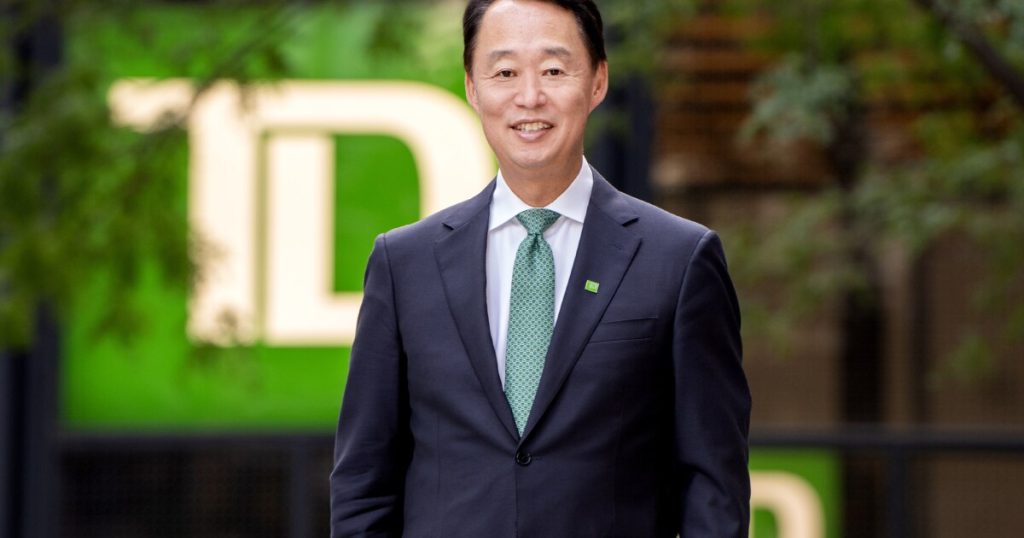
Since then, the bank appointed a new CEO, Raymond Chun, and expects to spend more than $1 billion on upgrading its risk management.
The Justice Department said in 2024 that it had also charged more than two dozen individuals across several money laundering schemes, including two bank insiders. The bank’s plea agreement requires its continued cooperation in
“This case shows how complex money laundering schemes often depend on insiders who are willing to bend — or break — basic safeguards,” said Philip Lamparello, a senior counsel in the U.S. Attorney’s Office in New Jersey. “Our office will continue to identify, investigate, and prosecute those who turn financial institutions into vehicles for large-scale criminal activity.”
Two other former TD employees have pleaded guilty to related charges in the last year.
“AML remediation continues to be the bank’s top priority, and we are actively cooperating with law enforcement to support their investigation,” a TD spokesperson said in an email to American Banker.
Nunez allegedly opened dozens of accounts in the names of shell companies, and falsely identified the owners in control of the accounts. Court documents say that he opened these accounts, often without any customer present, in exchange for a fee ranging from roughly $500 to $2,500, paid in either cash or through a peer-to-peer digital payment network.
The accounts were then issued over 600 debit cards, primarily by Nunez, per the court documents, which were used to make more than 120,000 withdrawals at ATMs in Colombia.
Nunez will be sentenced on May 27 on charges of money-laundering conspiracy and receipt of bribes by a bank employee. Conspiracy to launder money carries a maximum penalty of 20 years in prison and a fine of $500,000, or twice the amount involved in the offense, whichever is greater. The receipt of bribes as a bank employee carries a maximum penalty of 30 years in prison, and a fine of $1,000,000, or three times the amount involved in the offense, whichever is greater.
The case was investigated by the Federal Deposit Insurance Corp. Office of the Inspector General, in collaboration with the U.S. Drug Enforcement Administration, IRS-Criminal Investigation and law enforcement in New Jersey, Puerto Rico and Washington.
Earlier this month, a different ex-TD employee, Wilfredo Aquino, pleaded guilty to assisting a money-laundering scheme while he worked at the bank in New York. Aquino allegedly processed more than 1,600 bank checks that totaled roughly $92 million. The checks were funded by deposits that should have triggered certain compliance reports, which the court said Aquino didn’t appropriately file.
Aquino facilitated the movement of almost $2 million in cash in one month during 2021, per court documents, and accepted retail gift cards totaling over $11,000 as payment for helping the scheme.
Last year, former TD employee Jhonnatan Steven Rodriguez pleaded guilty to accepting bribes and making false bank entries. Rodriguez allegedly opened about 140 bank accounts fraudulently in late 2022. His sentence, handed down in November, includes 1 year of prison time and about $72,000 in restitution, according to court documents.
TD executives said in December that the bank has completed “the majority” of remediation actions, but is still auditing and testing its latest initiatives.
“That being said, we’re not at end of job,” Leo Salom, who leads the bank’s American operations, said at the time. “AML remediation remains our top priority, with significant work ahead and important milestones to come in 2026 and 2027.”