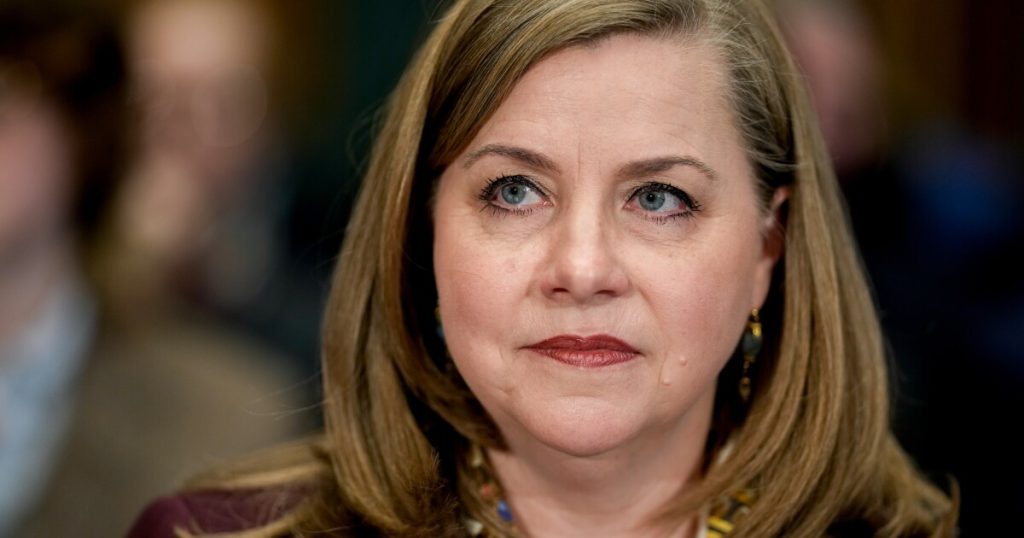
- Key Insight: Fed Vice Chair for Supervision Michelle Bowman said that Kraken’s limited purpose account is a test case to see how it performs.
- Expert Quote: “The Kraken account is only for one year. It’s a limited purpose account for a very short period of time. I consider it kind of like a pilot to see how that functions over time.” — Fed Vice Chair for Supervision Michelle Bowman.
- What’s at stake: The Fed’s approval of a master account for Kraken Financial comes as the central bank plans to introduce a “skinny” master account prototype by year’s end.
Federal Reserve Vice Chair for Supervision Michelle Bowman said Thursday that granting Kraken Financial a limited master account with the central bank is “a bit of an experiment.”
Processing Content
Speaking at an event hosted by the New York Bankers Association, Bowman noted that the central bank is viewing Kraken’s limited purpose account as a test case to see how it performs.
“The Kraken account is only for one year,” Bowman said. “It’s a limited purpose account for a very short period of time. I consider it kind of like a pilot to see how that functions over time.”
The Federal Reserve Bank of Kansas City
Bowman stressed that the approval does not signal broader access to such accounts.
“I wouldn’t say that it’s opening the flood gates,” she said. “It’s a bit of an experiment, frankly.”
Kraken receiving a limited-purpose account comes as the Fed prepares to introduce a prototype for a
The
Bowman on Thursday also addressed reforming the Fed’s discount window — a topic she and
“It is critically important that where we have banks that need to move collateral from the Federal Home Loan Banks to the discount window that there is a process that allows for that to happen seamlessly and quickly,” she said. “Generally, if you’re moving from FHLBs to the discount window, it’s because you’re experiencing some stress.”
She added that FHLBs are an important liquidity source for a number of institutions and that the issue is top of mind as potential talks on reforming liquidity requirements continue.
“It’s critically important that we recognize the importance of that relationship as a daily liquidity source for a number of institutions, not just banks,” she said. “We are considering that as we’re requiring banks to hold liquidity and understand the practical effects and actions that a bank takes to secure liquidity on a day-to-day basis.”
Bowman also touched on Fed monetary policy, noting the
“My hope is that we’re starting to see [fragility in the labor market] recede and that we’ll start to see a little bit more hiring and more growth,” she said.
Bowman added that
“I’ll be watching closely how that may impact some markets, especially energy markets, but at this point, I think it’s too early to tell what the impacts will be and how long those may go on,” she said.