- Key insights: Mastercard’s earnings beat analyst expectations.
- What’s at stake: CEO Michael Miebach expressed opposition to the Credit Card Competition Act and concern about a potential 10% credit card interest rate cap.
- Forward look: Mastercard projected revenue growth of just under 15% for 2026.
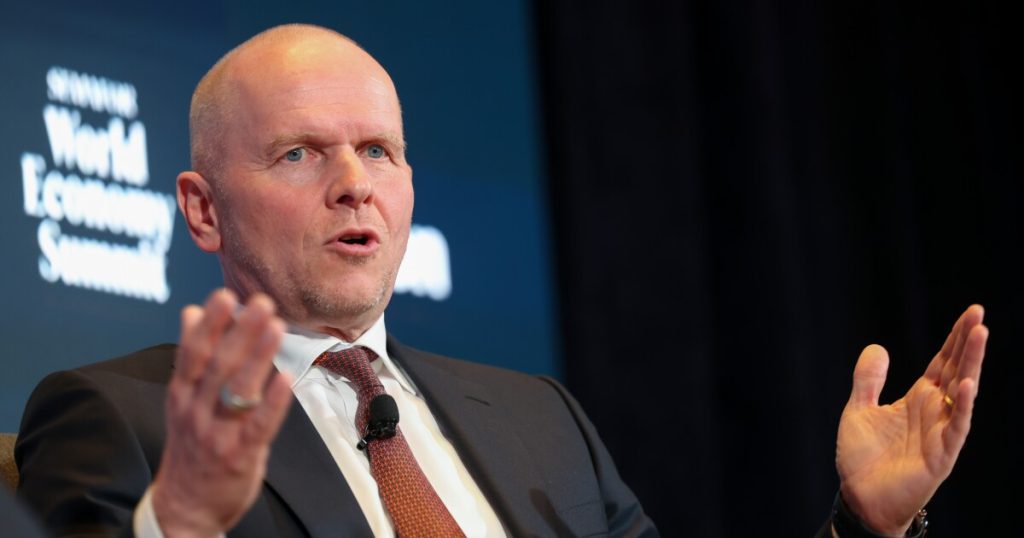
As President Donald Trump moves to exert greater control over the payments industry, Mastercard CEO Michael Miebach reiterated the card network’s opposition to the Credit Card Competition Act, while taking a cautious tone toward a potential 10% cap on credit card interest rates.
“The benefits of the [CCCA]have yet to be proven,” Miebach said during Thursday’s earnings call. “There is no particular consideration to pass on any savings to consumers.”
Processing Content
President Trump has threatened to impose a
“The [CCCA] is a race to the bottom for the cheapest network and not necessarily the safest,” Miebach said.
What Trump wants
The
In the wake of Trump’s support for the CCCA, which Republicans have traditionally opposed, the bill was reintroduced earlier in January. The card networks and banks have opposed the CCCA, while merchant groups support the act.
“There’s been very little progress on this bill,” Miebach said. “There is unified opposition.” Card issuers would likely respond to the CCCA by cutting rewards, marketing, raising fees and shifting more costs onto merchants through Visa and Mastercard, Jefffies said in a research note, though it added the new calls for the CCCA’s passage was likely “political noise.”
Trump’s call for a 10% interest rate cap has also drawn the ire of bank trade groups, such as the American Bankers Association, the Financial Services Forum, the Consumer Bankers Association and the Independent Community Bankers Association. Merchant trade groups, while supporting the CCCA, have not weighed in on Trump’s call for a 10% rate cap.”There’s an important conversation around affordability that should be addressed,” Miebach said.
“Here is a proposal that comes with a whole range of consequences. What does this mean for credit access for the most vulnerable people?”Miebach said that while Mastercard does not set interest rates, it does have a shared interest in the overall credit ecosystem. Mastercard is sharing data with banks and issuers to determine the impact of a 10% cap and what kind of introductory rates or other products may be introduced. He did not say if Mastercard is in discussions with the administration.
Mastercard’s earnings
The card network’s earnings beat analysts expectations. Mastercard reported earnings per share of $4.52 in the fourth quarter, up 20% from the prior year; and net revenue of $8.8 billion, up 15%. FactSet projected $4.24 per share and $8.77 billion.
Net income was $4.1 billion, up 22% from the fourth quarter of 2024. Mastercard, which has 3.7 billion cards in the global market, reported cross-border volume increased 14%, and overall transactions grew 10%. For the full year, the card network reported net revenue of $32.8 billion, up 15% over 2024, with 10% growth in overall transactions.
“The overall macroeconomic environment is supportive and we continue to see healthy consumer and business spending,” Miebach said.
For the first month of 2026, Mastercard’s transaction volume increased 10% vs. 10% in December 2024, which it said is a sign that recent consumer trends are continuing into the new year. Cross-border volume growth of 13% vs. 14% in the fourth quarter.
“The key performance indicators all look good through January with trends stable versus the fourth quarter,” Jeffries analysts said in a research note. Mastercard’s strength in its value-added services division was a primary driver in the earnings beat, according to Jeffries.
For 2026, Mastercard projects net revenue to grow just below 15%, based on a favorable macroeconomic environment. Mastercard also said a corporate restructuring would “affect about 4%” of the card network’s global staff, though they did not directly detail layoffs.
Miebach additionally showcased Mastercard’s work in agentic commerce. Mastercard’s recent moves include extending its
Mastercard has enabled U.S.-based issuers to support agentic commerce, and is on pace to enable global issuers. Mastercard said it has entered partnerships in Asia to support agentic commerce, is consulting with banks such as Lloyds and Santander and is piloting agentic payments in the UAE.