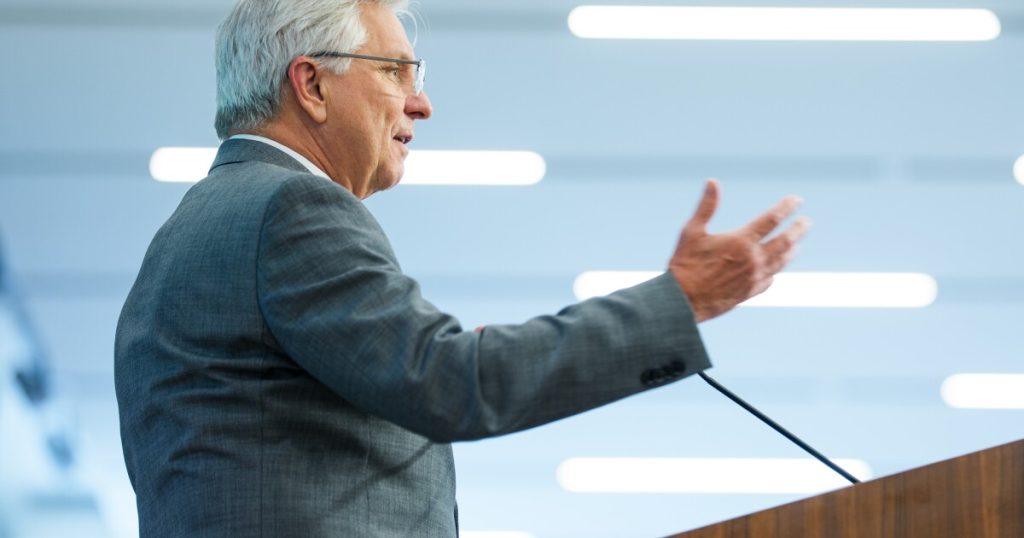
- Key insight: Federal Reserve Gov. Christopher Waller, one of the final contenders to serve as the next Fed chair, stressed the importance of keeping the Fed independent from the president while emphasizing accountability to the public.
- Expert Quote: “COVID was clearly an example of where you needed a coordinated fiscal and monetary response to the pandemic, and there’s nothing wrong with that — it’s not a threat to central bank independence in any way, shape or form.” — Fed Gov. Christopher Waller.
- What’s at stake: Fed Chair Powell’s term as Fed chair ends in May 2026. President Donald Trump said in early December he expects to announce his nominee to lead the central bank in January.
Federal Reserve Gov. Christopher Waller, considered a potential contender to lead the central bank when Chair Jerome Powell’s term ends in 2026, said Wednesday that monetary policy should remain insulated from direct influence by the executive branch.
Processing Content
Speaking at Yale University’s CEO Summit, Waller said communication between the president and the Federal Reserve should be limited to “very pressing” circumstances, with normal policymaking conducted through established channels. Waller is scheduled to meet later Wednesday with President Donald Trump.
“In times of crisis is when you should have a coordinated response,” Waller said. “COVID was clearly an example where you needed a coordinated fiscal and monetary response to the pandemic, and there’s nothing wrong with that. It’s not a threat to central bank independence in any way, shape or form.”
Waller said the Fed chair and the Treasury secretary meet every two weeks, typically over lunch, providing a forum for the administration to convey its views.
“I think that’s a typical channel of communication that’s well understood, and I don’t think there’s anything wrong with continuing that channel,” Waller added.
Since returning to office, Trump has sought to
Waller said he plans to emphasize the importance of Fed independence in his meeting with Trump, while also underscoring the need for accountability.
“There’s no institution in this country that is unaccountable to the electorate, and that’s what people often forget,” Waller said. “We want central bank independence to be free of political interference, but we still have to be accountable to the American public.”
He pointed to the regular news conferences held after Federal Open Market Committee meetings and public explanations of policy decisions as evidence of that accountability.
“The chair goes out and tries to explain to everybody why we did what we did, answer questions, and it’s all about transparency and accountability,” Waller said. “You may not agree with us, and that’s OK, but at least we tell you why.”
Waller said that if asked about the state of the consumer economy, he would tell Trump that wage growth has lagged while prices continue to rise, creating an affordability problem.
“The best thing we can do is try to get the labor market back on its feet, get the economy growing better, and hopefully the job security wage gains start catching up as inflation comes down,” he said.
Waller noted there is no urgency to sharply reduce interest rates but argued the Fed should gradually move policy toward a neutral stance to support the labor market.
“I still think we’re maybe 50 to 100 basis points off of neutral,” he said. “We still got some room. We could bring things down again.”
Waller supported 25-basis-point rate cuts at three consecutive FOMC meetings in September,
Powell’s term as