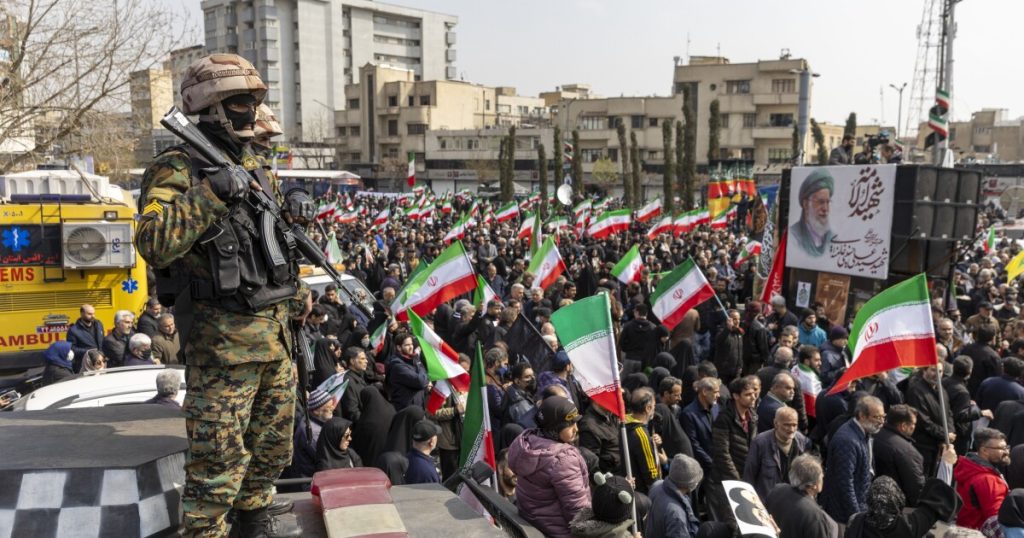
- Key insight: Bank dealmaking rebounded last year, but the consolidation frenzy may take a hit as bank stocks face pressure from the war in Iran.
- Expert quote: “Even if the war ended tomorrow, the economy is not going to go back to where it was on January 2, where we had only tailwinds and everything looked great, because we’ll still have a period of uncertainty.” — banking lawyer Peter Weinstock
- Forward look: Even when there’s more clarity about how the conflict in the Middle East may shake out, the shroud of uncertainty may still hold deals back.
Bank merger-and-acquisition activity, which surged ahead last year, may be on the cusp of a setback, as the war in Iran douses dealmaking with uncertainty.
Processing Content
Before the war, there had been a runway of tailwinds for banks looking to merge. But recent stock price volatility — exacerbated by the conflict in the Middle East — makes pricing deals tricky. Experts say the as-yet unknown outcome of the war, and its potential ramifications for the
Laurie Havener Hunsicker, an analyst at Seaport Research Partners, said the unknowns around the war will stoke fears of continued geopolitical tensions and stagflation, putting pressure on banks’ stock-market performance.
Most recent bank deals were paid for primarily in stock. Sell-offs on Wall Street decrease the value of the acquirers’ currency.
“In times of volatility, where you don’t have a line of sight, and stock prices are moving around — where stock prices go, so too do acquisition currencies,” Hunsicker told American Banker. “Stability is important to be able to do deals. Bank stocks are also frontline for any sort of economic woes, real or perceived.”
Bank deals in the U.S.
In 2025, many banks saw an opportunity to ink and complete mergers quickly for the first time in three years. Trump administration regulators
Coming into this year, banks appeared to be riding the same M&A wave. Peter Weinstock, a lawyer who leads the financial institutions practice at Hunton Andrews Kurth, said the industry entered 2026 “with only tailwinds,” following “white hot” M&A activity at the end of last year.
He said that he hasn’t yet seen a shift amid the U.S. bombing campaign that started on Feb. 28, but acknowledged that dealmaking slowdowns often lag economic downturns.
The war has choked off traffic through the Strait of Hormuz, a critical global shipping channel, which has led to higher oil prices. That price shock, along with recent wavering in U.S. employment numbers, is a
Hunsicker said the conflict abroad will likely put bank M&A conversations on ice. In addition to the war with Iran, she pointed to recent rumblings about potential cracks in asset quality,
“Trump’s decision to attack Iran has injected some form of volatility, like long-lasting shock, into the whole global economy,” Hunsicker said. “And this comes on the backdrop of things we were already watching. Even though overall credit quality in the bank group is very, very benign, the ‘cockroach’ fears were starting to creep back into the narrative.”
The KBW Nasdaq Bank Index and KBW Nasdaq Regional Banking Index are both down more than 11% in the last month. The indices are both down more than 4% since Feb. 28.
Constriction of the economy eventually impacts bank performance, which challenges deal pricing, Weinstock said.
“At the end of the day, if the economy is not growing sufficiently, then loan growth will start to diminish,” he said. “And it doesn’t matter what the yield curve is doing — if you don’t have anybody to take out loans or any places to put the money, bank profits will start to grow more slowly.”
Hunsicker said that even if some banks do still decide to execute merger plans, she doesn’t expect those deals to come at the premium prices that would have been offered “all else being equal.”
Last spring, as U.S. tariff policies rapidly evolved, “you saw a complete evaporation of deals,” Hunsicker said. “And any deals … went off at very discounted or defensive pricing.”
Deals that were announced in the spring of 2025 were priced close to tangible book value, or below.
On the West Coast,
In Massachusetts, Eastern Bankshares’
Pricing eventually recovered, as the pace of tariff changes stabilized, and companies were able to make plans to swallow the costs. In July, Huntington Bancshares in Ohio announced plans to buy Texas-based Veritex Holdings, issuing 1.95 shares for each outstanding share of Veritex. A flurry of other high-priced transactions were announced in the second half of the year.
Throughout all of 2025, the average price-to-tangible-book-value for bank deals was 149%, per Hunsicker’s analysis. And the start of 2026 put the industry on track to log the highest pricing in at least six years, she said.
The demand for consolidation is still strong. Hunsicker said that there are still banks that want to buy, and others that want to sell, but not under adverse circumstances.
In February,
Weinstock said there’s still a real basis for combinations. Many of the same
Even if the economy stumbles, investment bankers will keep reaching out to possible targets, though formal negotiations may be tabled until there’s more geopolitical certainty, Weinstock said.
But even when the market has settled, the effects of the conflict in the Middle East, real or perceived, will likely still cast a pall over bank agreements.
“Even if the war ended tomorrow, the economy is not going to go back to where it was on January 2, where we had only tailwinds and everything looked great, because we’ll still have a period of uncertainty,” Weinstock said. “I just don’t see the economy rebounding to where it was.”