- Key insight: A more receptive attitude toward de novo formation may be leading to an uptick in the number of community bank groups seeking charters.
- Expert quote: “If we can squeeze down those capital costs, if we can open up the aperture on new business models, we can get more de novos into the system.” — Conference of State Banking Supervisors president and CEO Brandon Milhorn
- Supporting data: Eighteen bank groups have conditional charters or charter applications on file, according to FDIC statistics.
Anxiety over the low number of de novo banks emerged as a serious policymaking theme in 2025, as the pace of new bank formation remained frustratingly slow.
Processing Content
Just four new banks opened in 2025, down from six the previous year, according to Federal Deposit Insurance Corp. statistics. Those four banks were BankMiami in Miami, Florida; Five Rivers Bank in Paramus, New Jersey; Thrivent Bank in Salt Lake City; and Solutions Plus Bank in Albertville, Alabama.
The FDIC has also okayed charters for eight banks currently in formation, with final approval contingent on the organizing groups meeting capital requirements and several other conditions.
New bank formation continued at a snail’s pace last year, despite the fact that FDIC Chairman Travis Hill has prioritized encouraging de novo banks.
One day after President Trump was inaugurated, Hill said in a statement that the FDIC would seek to ensure that “there is a healthy pipeline of new entrants in the banking sector.”
Last month, Hill told lawmakers that the FDIC would consider changing requirements “that may overly restrict de novo formation from traditional community banks.”
Hill added that the agency would also adopt a more open approach to applications from proposed banks “with new or innovative business models.”
Banking advocates point to several factors they say have acted as roadblocks to new banks, including heavier post-financial crisis compliance costs and
In a November
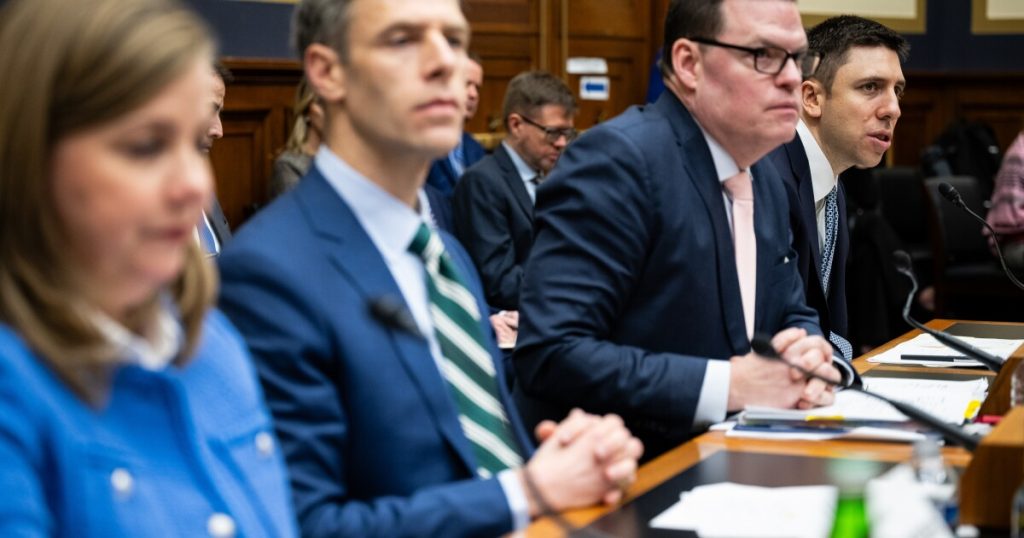
And at a congressional hearing in May, Mary Usategui, CEO of the $141 million-asset BankMiami, told lawmakers that a $32.5 million capital target set by regulators left her organizing team stuck in neutral for months. The organizers were eventually able to raise enough capital to open in March.
“We raised the majority of what we needed fairly quickly, boosting our confidence in our plan,” Usategui said. “Then we sat … for six months before we were able to push forward and ultimately finalize our raise.”
One bright spot came in December, when Alabama-based Solutions Plus opened for business with $26 million of capital. CEO Thomas Carroll termed it the largest de novo bank funding effort ever undertaken in the region.
“This is more than a capital raise — it’s a community rallying behind a shared vision,” Caroll said in a press release.
Still, for many bankers and banking stakeholders, the slow rate of de novo bank creation is “a real area of concern,” Brandon Milhorn, the Conference of State Banking Supervisors’ president and CEO, told American Banker. “The small business lending, the agricultural lending, the relationship-based consumer lending that community banks do, it’s not being replaced.”
De novo activity largely froze in the aftermath of the financial crisis, with just six banks opening from 2011 through 2016. The pace subsequently quickened, with a total of 59 banks opening between 2017 and 2022, but it’s slowed again since the start of 2023.
In recent months, regulators and lawmakers have signaled a willingness to consider fresh approaches to speed the creation of new banks.
In April, the House Financial Services Committee approved a
And in October, the Office of the Comptroller of the Currency granted
The FDIC has “started to see growing interest by prospective applicants and increased draft and formal filings,” Hill said in his December congressional testimony.
And at least three organizing groups — one
“I think there is hope,” Milhorn said in an interview. “If we can squeeze down those capital costs, if we can open up the aperture on new business models, we can get more de novos into the system. That would be a good thing for the United States.”